
Immigration Guides
If your job ends while you hold E-1, E-2, E-3, H-1B, H-1B1, L-1, O-1, or TN status, federal regulation (8 CFR 214.1(l)(2)) provides that you and your dependents are not considered to have failed to maintain status solely because the employment ended, for up to 60 consecutive days or until your current authorized stay expires, whichever comes first.
There is no single “H-1B green card process.” An H-1B worker generally reaches permanent residence through one of five employment or family routes: an employer-sponsored petition through PERM labor certification (EB-2 or EB-3), a self-petitioned or employer-filed EB-2 National Interest Waiver, an EB-5 investment petition, or a family-based petition such as marriage to a U.S. citizen.
A national interest waiver (NIW) is faster than employer sponsorship at the front of the process because it removes the Department of Labor stages an employer-sponsored EB-2 must complete before the immigration petition can be filed: the prevailing wage determination, the recruitment period (including the notice of filing), and the labor certification (PERM) adjudication.
The U.S. Citizenship and Immigration Services (USCIS) has restored its officers’ full discretion to deny an immigration benefit request without first issuing a Request for Evidence (RFE) or a Notice of Intent to Deny (NOID). That authority took effect on August 5, 2026 under Policy Alert PA-2026-05, and immediately applied the moment it was published and reached pending cases.
USCIS does not offer premium processing for Form I-130. There is no fee that buys a faster decision on a family petition, no upgrade to request, and no version of Form I-907 that applies. Anyone offering to accelerate an I-130 in exchange for payment is describing a service that does not exist.

No, not by itself, if you were inspected and admitted or paroled when you entered the United States and your spouse is a U.S. citizen. Immediate relatives of U.S. citizens are exempt from the adjustment bars at INA 245(c) that would otherwise disqualify someone who failed to maintain lawful status, violated the terms of a nonimmigrant admission, or worked without authorization, and no waiver is required for those issues.

There is no single timeline for a marriage green card. The total time is the sum of separate stages, and each stage has its own clock. The most current timing figures are the ones posted on the live USCIS Processing Times tool and, for consular cases, the Department of State’s National Visa Center (NVC) and embassy pages, because those figures change month to month and are estimates, not commitments.

The E-2 visa never converts into a green card on its own. A treaty investor who wants permanent residence must qualify under a separate immigrant category and file a separate petition: EB-5 (immigrant investor, Form I-526 or Form I-526E), EB-2 with a National Interest Waiver (self-petitioned Form I-140), EB-1A extraordinary ability (self-petitioned Form I-140), EB-1C multinational manager or executive (Form I-140 filed by the U.S. company), employer-sponsored EB-2 or EB-3 through labor certification, or a family-based petition such as marriage to a U.S. citizen.

EB-5 concurrent filing lets an investor who is already in the United States file the green card application (Form I-485, Adjustment of Status) at the same time as the investor petition (Form I-526E), or while the I-526E is pending, instead of waiting years for the petition to be approved first.
An approved L-1A petition helps an EB-1C case but does not decide it. The two categories share the one-year-abroad requirement, the qualifying corporate relationship, and the managerial and executive definitions, and neither requires labor certification (PERM). An EB-1C case requires that the U.S. employer must already have been doing business for at least one year on the date the Form I-140 is filed.
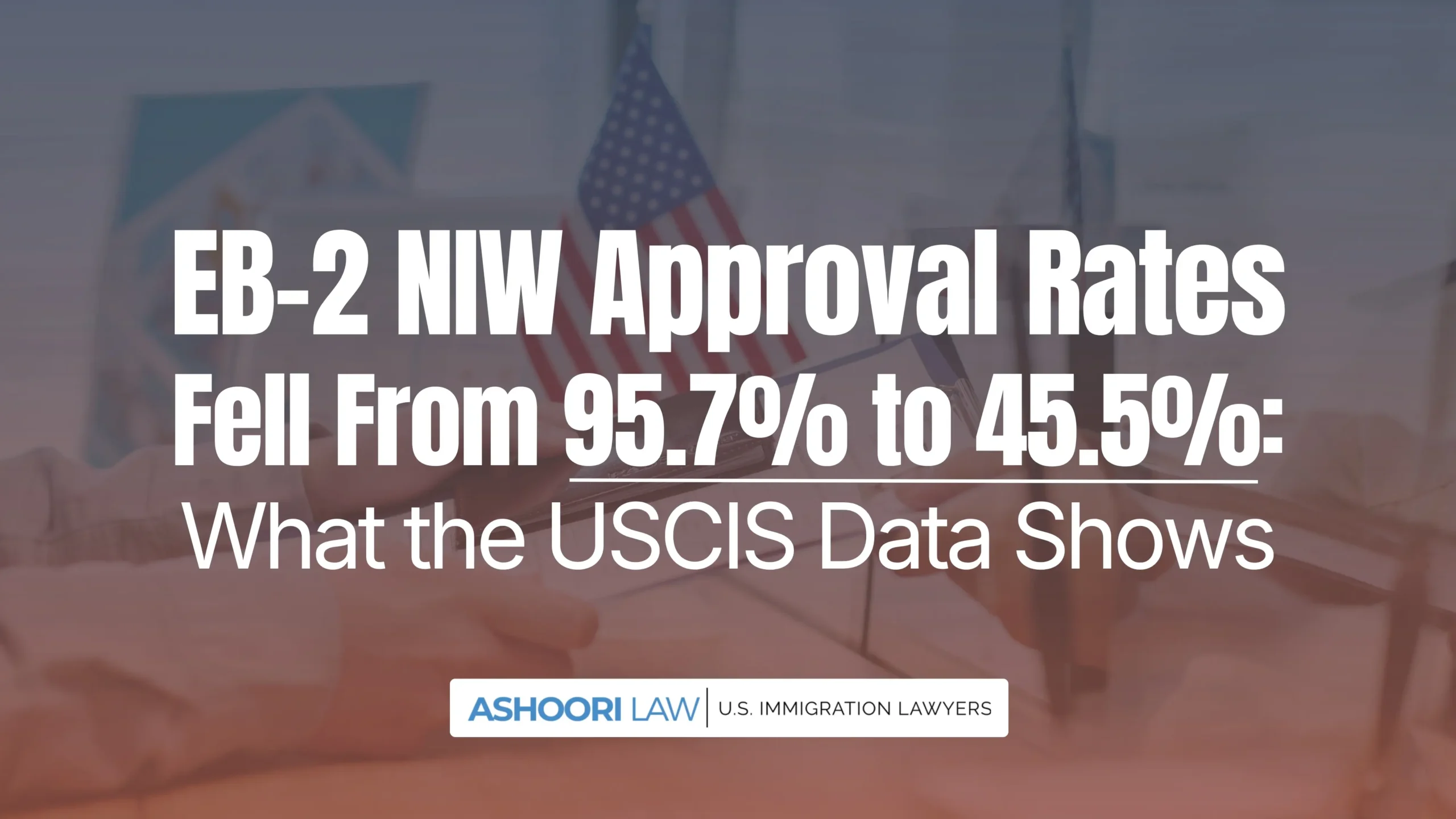
In fiscal year 2022, USCIS approved 95.7 percent of the EB-2 national interest waiver petitions it decided. In the first half of fiscal year 2026, it approved 45.5 percent. Denials outnumbered approvals across those two quarters, 6,486 to 5,410.
EB-1A (extraordinary ability) is the harder category to qualify for, and EB-2 NIW (National Interest Waiver) is the more accessible one. In recent Visa Bulletins, EB-1 cutoff dates have been more favorable than EB-2 dates, although visa availability changes monthly by preference category and country of chargeability, so the current bulletin controls.
The 60-day grace period for nonimmigrant workers remains in force today. DHS has submitted a proposed rule that would eliminate it, but that proposal is at an early stage of review, its text has not been made public, and no final rule or effective date exists.
The bottom line first: September 30, 2026 is the last day to file a qualifying Form I-526E petition and receive statutory grandfathering protection under the EB-5 Reform and Integrity Act of 2022 (RIA), which requires USCIS to keep processing a protected petition even if the Regional Center Program later expires. Under section 103(b) of the RIA, the protection covers regional center investor petitions filed on or before that date and carries through to the related removal of conditions petitions (Form I-829).

There is no minimum E-2 investment amount set by statute or regulation. The requirement is that the investment be substantial, and substantiality is measured in proportion to the total cost of the particular business you are buying or building. The $100,000 figure repeated across so many websites is not invented, but it does not mean what it is usually taken to mean.


Michael Ashoori, Esq.
President of Ashoori Law
I’m a U.S. immigration lawyer and I help families, professionals, investors, and entrepreneurs get visas, green cards, and citizenship to the United States.
Since starting my law firm, I’ve helped thousands of people from all over the world with their immigration needs. I’m very passionate, hard-working, and committed to my clients.
Got a question? Send me an email.