
P Visa Guide for Athletes and Entertainers Working in the U.S.
The P visa is a special visa for athletes and entertainers. It allows them to participate in an athletic event or performance.
Here, I will discuss the important details of the P visa. If you have any questions regarding this visa, Ashoori Law would be happy to assist you. You can also feel free to email me directly at contact@ashoorilaw.com. I’m very responsive via email and I would be happy to help you.
Overview:
1. What is the P visa?
2. What are the benefits of a P visa?
3. What are the requirements for the P visa?
4. What are the responsibilities of the petitioner?
5. P Visa Process
6. What documents are required for the P visa?
7. P Visa Fees
8. P Visa Processing Time
9. Conclusion
1. What is the P visa?
The P visa is a special visa for athletes and entertainers. It allows them to compete in an athletic event or give a performance in the United States. There are three categories under the P visa.
- The first is the P-1 visa. It can be used by athletes: either as an individual or a team. These individuals are coming to compete in an athletic event in the United States. It can also be used by those coming to perform in an entertainment group.
- The second is the P-2 visa. It is used by entertainment groups who are participating in reciprocal exchange programs.
- The third is the P-3 visa. It is for entertainment groups performing culturally unique performances.
Additionally, essential support personnel may qualify for any of these three categories. Essential support personnel includes anyone who the principal beneficiary will need in order to successfully perform (bandmates, coaches, etc.).
Finally, spouses and dependent children are eligible for the P-4 status. This enables them to come to the United States, but prohibits them from working while here.
The P visa is only appropriate for people actively working in their profession. It is not appropriate if you are instructing at camps or engaging in promotional events.
A P-1 visa, for an individual athlete, is eligible for up to 5 years, with a single 5 year extension. All other P visas will be approved for a maximum of 1 year. Some extensions for long-term events or performances may be possible. There is no limit on how many P visas can be granted per year.
2. What are the benefits of a P visa?
There are many benefits to the P visa. Here are just a few:
Athletes and entertainers can work in the United States.
- This visa allows foreign athletes and entertainers to work in the United States, similar to several other immigration pathways available to foreign professionals. This visa allows participants to work, compete, and perform in the United States.
Dependent spouses and children are eligible to come to the United States.
- A spouse and any dependent children of the athlete or entertainer can come to the United States on a P-4 visa. This allows them to stay with the principal beneficiary while they work in the United States. During this time, your spouse and/or children may not work. However, they can attend school.
You do not have to be of “exceptional ability.”
- The P visa requires participants to be internationally renowned. This is a less strict requirement than the O visa, which requires "exceptional ability". This makes the P visa a good option for some individuals who may not qualify for the O-1 visa.
3. What are the requirements for the P visa?
Each category (P-1, P-2, and P-3) under the P visa program have slightly different requirements. Furthermore, athletes and entertainers have different eligibility grounds. My team and I can help you determine if a P visa is right for you.
For everyone seeking a P visa, the following conditions must be satisfied:
You must have nonimmigrant intent.
- All applicants must show that they have a residence abroad that they will return to after their visa expires.
- However, the principal beneficiary is able to simultaneously seek permanent status. Therefore, an application for an immigrant visa will not affect the approval of a P visa petition. However, those coming as essential support personnel may not simultaneously seek permanent status. Therefore, they may be rejected for a P visa if they have a pending or approved application seeking permanent residence.
- Additionally, the standard in proving nonimmigrant intent is higher for those seeking P-2 and P-3 visas, over P-1 visas. Applicants for these visas may need to provide more evidence showing nonimmigrant intent.
Your work must not adversely affect American workers.
- If the Department of Labor has certified there is a strike or labor dispute at the worksite, the P petition will be denied. If the petition has already been approved, the visa application will be denied.
You must be from an eligible country.
- If you are a national of a country listed as a state sponsor of international terrorism, you may not get a P visa. The only exception to this rule is if the Secretary of State and Secretary of Homeland Security determine you are not a danger. My team and I can provide further information about this rule if it applies to you.
For athletes seeking the P-1 visa, the following conditions must also be satisfied:
The beneficiary must be coming to the US solely to participate in a competition, performance, tour, or event.
- The event should take place over a finite period and should not be of permanent duration. The start and end dates should be explicitly stated in the petition. The petitioner can make guest appearances, but they may not be the only reason for the trip. The program involving teaching, coaching, and/or training other individuals or groups are not eligible for this visa.
The beneficiary must be considered a professional athlete.
- To be considered a professional athlete, you must meet one of the following requirements:
-
- Perform as an athlete at an internationally recognized level of performance. This can be at either the individual or team level.
-
- Be employed as an athlete by a team that is:
-
-
- member of an association with 6+ teams whose total revenues exceed 10 million dollars annually and whose association regulates the conduct and performance of the member teams OR
-
-
-
- any minor league team affiliated with this association
-
-
- Perform in a theatrical ice-skating production. This may be either professional or amateur and either as an individual or as a group.
Please be aware that coaches do not qualify under the P-1 visa as they are not athletes. However, they may be eligible for a P-1 visa under the COMPETE Act. My team and I can provide more information about the COMPETE Act.
The beneficiary must have international recognition.
- The beneficiary must be renowned in more than one country to meet this requirement. Some evidence of this could include participation in major competitions, significant honors, or written support from an expert in the field. The overall group, not the individuals in the group, must be internationally recognized. Not every individual who plays at an international level is considered internationally recognized.
For entertainment groups seeking P-1 visas, the following conditions must also be satisfied:
The beneficiary must be involved in the arts.
- The arts include, but are not limited to, fine arts, visual arts, and performing arts. Circus performers can get P-1 visas, but there are slightly different requirements for them. These requirements will be discussed later in this guide.
The beneficiary must be an integral part of the performance.
- This means that the performer must contribute meaningfully to the performance. The performer must also be considered outstanding in the discipline. This requires the performer to have been a member of the group for a “substantial” period of time. This is usually considered to be one year. Entertainers seeking a P-1 visa must be a member of a group. Individual entertainers are not eligible for a P-1 visa.
The group must be considered a group.
- Unlike with athletes on a P-1 visa who can be coming as either an individual or a team, entertainers must come as a team.
- This requirement is one of the most difficult conditions for many groups. A group is defined as two or more people established as a single entity to perform or provide a service. A group must have been established for at least one year. Additionally, at least 75% of the beneficiaries must have been in the group for at least one year.
- A group does not need each member to perform an equal role. It could consist of several members each with equal roles. However, a group could also be a lead singer with a consistent group of background performers.
- Not every member of the group has to be a beneficiary of a P visa. This means other members of the group can be US citizens or hold other status.
The group must be internationally recognized.
- To be internationally recognized, you must have received significant awards, performed in prestigious events, and/or have support from experts in the field. Only the group, not the individuals in it, must be internationally recognized. If only a few members of a large group will be performing, only those performers - not the entire group - will be considered. Members of the group are not able to perform work outside of the group while in the United States.
Exceptions
There are some exceptions of the previous requirements:
- Groups recognized nationally for significant periods of time may be exempt from the international recognition rule.
- This may be especially important in cases where media access or geography make it difficult to perform internationally.
- Secondly, up to 75% of the beneficiaries in a group can be exempt from the requirement of having performed with the group for at least one year.
- Thirdly, circus performers do not need to have performed with the group for any length of time. They also need only national (not international) recognition.
- An immigration lawyer, including myself or another member of my team, can help you determine if any of these exceptions apply to you.
For artists and entertainers seeking a P-2 visa, the following conditions must also be satisfied:
The beneficiary will be an integral part of the performance.
- This is similar to the requirement for entertainers hoping to seek a P-1 visa. However, unlike for the P-1 visa, the beneficiary or beneficiaries do not have to be of exceptional ability.
The beneficiary will perform under a reciprocal exchange program.
- The program must be between one or more US groups and one more organization in a foreign state. The performers from the US and the foreign country must be a similar level and held to similar terms and conditions.
For artists and entertainers seeking a P-3 visa, the following conditions must be satisfied:
The program must be considered culturally unique.
- This means that the program must be unique to, “a particular country, nation, society, class, ethnicity, religion, tribe, or other group of persons”. The program can be intended to teach others or to perform. The program can be either by an individual or a group. P-3 visas are unique in that group does not need to have performed together previously.
- These programs must be demonstrative of a specific, distinct cultural practice. It is not enough for the performance to just be in a foreign language. It is also not enough for the performance to be popular in a foreign country.
4. What are the responsibilities of the petitioner?
Petitions are filed by a petitioner on behalf of the beneficiary. This person can be either an employer or a third-party organization. The beneficiary is a foreign national who seeks to come to the US on a P visa.
Multiple beneficiaries working in the same group can be named on a single petition. However, if a beneficiary will be working for multiple employers, each employer must submit their own petition. The only exception is if a agent will file a petition on behalf of all employers.
The petitioner is also responsible for paying for the beneficiary to return home at the end. The only exception to this rule is if the beneficiary chooses to leave before the program is done.
5. P Visa Process
The process for receiving a P visa is a multistep process. The following will be a general listing of the process. A more detailed explanation of each step will follow. An immigration lawyer can help you through this process.
- Preparing and submitting the P Petition
- P Visa Application
- Arrival in the United States
Preparing and submitting the P petition
The first step of the process is submitting a petition requesting P visa status. The petitioner should submit two copies of the petition to US Citizenship and Immigration Services (USCIS). You must submit a petition, and it can be filed up to one year before the date of need.
Essential support personnel should be listed on a different petition than principal beneficiaries.
Denied petitions can be appealed through the Administrative Appeals Office (AAO).
An immigration lawyer, including myself or another member of my team, can answer any questions about this petition process. We would also be happy to assist you in completing your petition.
The following documents will be required:
A Cover Letter
- The cover letter provides a brief introduction to your case. It helps explain what you are asking for and why you are eligible.
Form G-28
- This form gives an attorney or another representative the right to act on your behalf throughout the application process. Official instructions and additional details for Form G-28 are available on the USCIS website.
Form I-907
- This form only needs to be included if you have paid extra for premium processing. This guarantees you will hear a response regarding your petition within 15 calendar days. For more information about Form I-907 (Request for Premium Processing Service), please visit the USCIS website.
Form I-129 (with O and P Classifications Supplement)
- This form provides basic information about the petitioner and the beneficiary. It also provides information about the work the beneficiary will do in the United States. Additional details about Form I-129 are available on the USCIS website.
Support statement
- This is a statement written by the petitioner highlighting the beneficiary’s successes. This provides information about the petitioner and the assignment. Its main focus should be on the beneficiary and their qualifications.
Index of exhibits
- The index of exhibits contains all of the documents you are choosing to include to help support your application. This documents you may want to include are discussed in the section, "What documents are required for the P Visa?" An immigration lawyer, including myself or another member of my team, can help you determine which documents you should include.
Two particularly important documents to include are the contract and the advisory opinion. The contract should be between the petitioner and the beneficiary. It should include information about the job duties, wages, work schedule, work conditions, and benefits. The advisory opinion should be written by a labor organization. It is required for all P visa applicants, except major league baseball players. Unlike for O visas, a peer review is not sufficient. The labor organization will help explain the job duties and the beneficiary’s qualifications. Finally, they will state if they believe the beneficiary meets the conditions for a P visa. This will only be exempt if there is no existing labor organization or if no labor organization writes advisory opinions. In these cases, an expert opinion or independent evidence may suffice.
P Visa Application
One of the two copies of the P petition sent to USCIS will be forwarded to the appropriate consulate. If USCIS approves the petitioner, they will inform the consulate through the Kentucky Consular Center (KCC). The petitioner and their attorney will also be notified when the petition is approved.
At this point, the beneficiary can apply for a visa at their local US consulate. This appointment can be made up to 90 days before the start date of the program. You should bring the approval notice for the petition, a continued statement of support from the petitioner, a certified copy of the petition, and evidence of your foreign residence/nonimmigrant intent to your meeting with the consular officer. Please note that a consular officer can reduce the length of the visa from the time requested on the petition.
Arrival in the United States
Those with P visa status may come to the United States up to 10 days before their official start date. However, you may not begin working until the date listed on your start petition. You should bring your passport, P visa, and P petition approval with you to the United States. You should receive an I-94 card or a stamp in your passport. You should make sure expiration date matches the information listed on your visa.
6. What documents are required for the P visa?
Many documents may be requested during the P visa application process. The following is a general list. Please be aware this list is not comprehensive and the exact documents you will be required to submit will depend on your individual case. My team and I can help you prepare the appropriate documents for your situation.
- Basic information about the employer
- Description of the competition, performance, or event
- Copy of employment contract
- Independent evidence of the foreign national’s international recognition
- Information from the foreign national regarding their accomplishments
- Evidence of a reciprocal program
- Evidence the program will be “culturally unique”
- Copy of the foreign national’s resume
- Copy of the foreign national’s degrees / transcripts
- Copy of the biographic page(s) of passport(s) of foreign national and any dependents
- Letters of support from previous employers
- Letters of support from industry experts
- Complete itinerary
- Documentation of wages to be paid
- Business license
- Federal tax returns
- Written consultation from a labor organization
- Evidence of a residence abroad (property taxes, property deed, mortgage, etc)
7. P Visa Fees
There are several fees associated with the P visa application process. Please be aware that these fees are subject to change.
- Petition Filing Fee: $460 (paid by petitioner)
- Visa Filing Fee: $160 (paid by petitioner)
- Other costs (including translations, photocopying, etc): vary on a case-by-case basis
8. P Visa Processing Time
The total time your P visa application takes to process depends on a variety of factors. These factors include the time of year, the USCIS Center where you submit your petition, and the US consulate that you use. However, most P visa applications take a total of between 3 and 6 months.
9. Conclusion
The P Visa is a good option for entertainers and athletes coming to perform or compete in the United States. You should now have a much stronger understanding of the P visa, including its benefits, requirements, and application process.
If you have any questions about anything discussed in this guide or about the P visa, feel free to email me directly at contact@ashoorilaw.com. I am very responsive via email and I would be happy to help you.

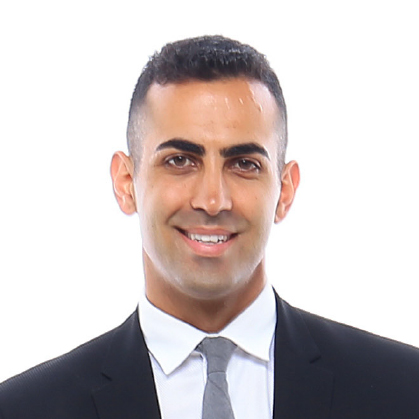
Michael Ashoori, Esq.
President of Ashoori Law
I’m a U.S. immigration lawyer and I help families, professionals, investors, and entrepreneurs get visas, green cards, and citizenship to the United States.
Since starting my law firm, I’ve helped thousands of people from all over the world with their immigration needs. I’m very passionate, hard-working, and committed to my clients.
Got a question? Send me an email.