
How to Find Your Alien Registration Number and When You May Need It
Author: Grace Remington, Esq.
Introduction
Clients are often asked to provide an Alien Registration Number when completing immigration forms or reviewing their immigration records.
Despite how frequently it appears in the immigration process, many people are unsure what it is, where to find it, or whether they even have one.
Understanding what the number represents and how to identify it can help avoid confusion and prevent errors in filings.
What Is an Alien Registration Number
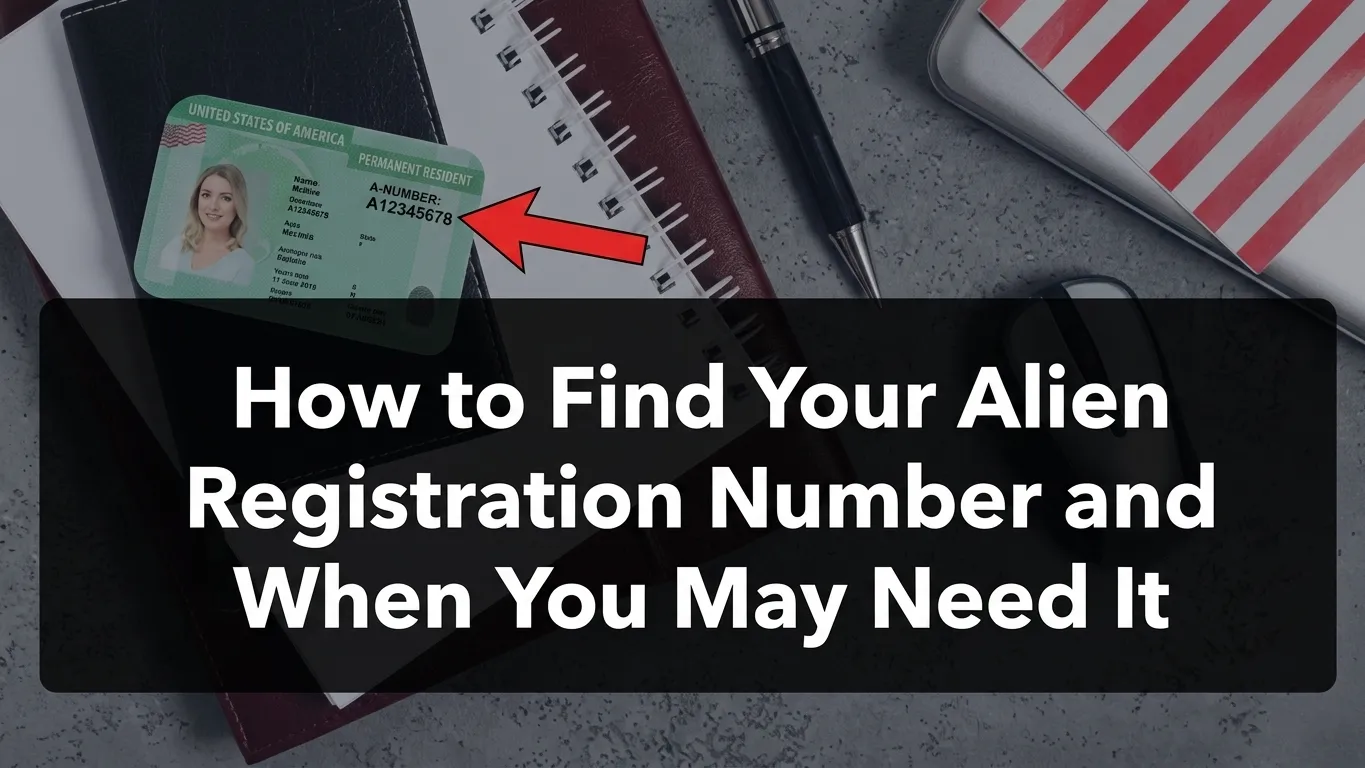
An Alien Registration Number, often called an A-Number or USCIS Number, is a unique personal identifier (typically seven, eight, or nine digits) assigned by the Department of Homeland Security to certain noncitizens in the U.S. immigration system. It is used to track an individual’s immigration record across different applications and filings.
Clients often confuse them because both appear on immigration paperwork. The A-Number is tied to the individual, not to a specific application.
Why Noncitizens Need It
- Completing immigration forms
- Preparing for a consultation related to green card renewal
- Organizing and reviewing immigration records
- Responding to agency requests
- Filing for benefits and submitting supporting documents
- Preparing for case inquiries to USCIS.
Note: Most online case-status checks require the receipt number for a specific filing, not the A-Number.
In many cases, the request for an A-Number is simply to ensure the correct immigration record is being referenced. Providing the correct A-Number can help USCIS or another agency match records to the right person in many situations.
Even so, specific filings are usually tracked by receipt number.
Where to Look
| Document | What to Look For |
|---|---|
| Green card | Usually contains the A-Number but may be called a USCIS # |
| Employment authorization document | Usually contains the A-Number but may be called a USCIS # |
| Immigrant visa materials | May appear on the immigrant data summary, USCIS Immigrant Fee handout, or immigrant visa stamp (labeled as the Registration Number) |
| USCIS notices and correspondence | May include the A-Number, depending on the type of filing and notice |
| Other immigration records or government documents, including some prior filings, immigration court records, and certain CBP- or DHS-related records related to reentry permit | Customs and Border Protection (CBP) documents for land crossings may contain it. Prior filings or older official records, such as those from the Department of Justice or the Immigration and Naturalization Service (INS) may contain it |
Documents That May Cause Confusion
Multiple numbers appear across immigration documents, and they are not interchangeable.
| A-Number | Receipt / Case Number |
|---|---|
| Personal immigration identifier | Application-specific tracking number |
| Tied to the person across immigration history | Tied to a specific immigration benefit filing or case |
| May appear across documents | Changes with each new benefit filing |
| Commonly shown as the letter ‘A’ followed by 7, 8, or 9 digits. On many modern records, they appear as 8 or 9 digits (sometimes with leading zeros added to fit a 9-digit format). | A combination of letters and numbers, usually 10 to 14 additional digits long, and sometimes beginning with three letters |
Noncitizens often mistake receipt numbers, visa numbers, or case numbers, notice numbers, and confirmation numbers for an A-Number. Careful review is important before entering information on a form. Not everyone is assigned an A-Number. Whether one exists depends on a person’s immigration history and prior filings.
Common Misconception
Some temporary visa holders may not receive an A-number. Whether one exists or will be received often depends on the person’s filings and case history.
People who have had more substantial contact with the immigration system, such as lawful permanent residents, many applicants for adjustment of status or employment authorization, people in removal proceedings, and some immigrant visa applicants, may already have an A-Number.
But whether a person has an A-Number depends on the type of case and their immigration history. Many temporary visitors, including many B-1/B-2 applicants, may not have an A-Number.
Still, noncitizens should not assume either way, because prior filings or immigration history can change that.
What to Do If You Cannot Find It
- Review your own prior immigration notices, cards, visa materials, and court or agency records to identify the correct number
- Check identity and status documents
- Gather copies before contacting agencies
- Compare numbers carefully
- Bring records to counsel
- Use USCIS online tools first when available, and contact the USCIS Contact Center if needed (if records are unclear or inconsistent, legal guidance may help)
If the number cannot be located, it is better to leave the field blank or indicate that it is unknown rather than guess.
There is no single visual format for an A-number that applies in every case. Nevertheless, there are some general formatting features that can help identify an A-Number correctly. Reviewing documents carefully is important.
| Issue | Considerations |
|---|---|
| Numerical length | Formatting may vary in records, but since the year 2003, the A number will almost always be nine numerical digits |
| Leading zeros | Older A-numbers, prior to 2003, may be fewer than nine digits but since immigration systems usually require nine digits, leading zeros may be added if the A number is not already nine digits long. |
| Label differences | It may appear under different labels, such as USCIS #, INS #, or immigration file number |
| Digit separation | Digits may be separated in threes, such as A000-000-000 or appear as one like A000000000 |
| Missing prefix | The prefix “A” may not be shown and appear simply as 000-000-000 and 000000000 |
When Legal Guidance May Help
Legal guidance may be helpful if multiple A-numbers appear across documents, if records are incomplete, or if prior filings contain inconsistencies. Identifying the correct number before submitting forms can help avoid delays or requests for clarification.
Frequently Asked Questions
-
- Q: What is an Alien Registration Number?
- A: It is a unique identifier assigned to certain noncitizens to track their immigration records.
-
- Q: Is an A-Number the same as a USCIS receipt number?
- A: No. A receipt number tracks a specific application or petition, while an A-Number is tied to the individual.
-
- Q: Is an A-Number the same as a Social Security Number?
- A: No. A Social Security Number is used for employment and tax purposes, not immigration tracking. However, they are similar in that they are attached to a single individual and do not tend to change over a lifetime.
-
- Q: Where can I find my A-Number on a green card?
- A: It is typically listed on the front of the green card and labeled as the USCIS number.
-
- Q: Where can I find my A-Number on a work permit?
- A: It is usually printed on the front of the employment authorization document and labeled as the USCIS number.
-
- Q: Do all noncitizens have an A-Number?
- A: No. Assignment depends on the individual’s immigration history and filings.
-
- Q: Do temporary visa holders have an A-Number?
- A: Some do, but many do not unless they have filed certain applications/petitions or have an immigration record that requires it.
-
- Q: What should I do if I cannot find my A-Number?
- A: Review prior documents and avoid guessing. Seek guidance if needed.
-
- Q: Can my A-Number appear under a different label?
- A: Yes. It may appear as a USCIS #, INS #, A#, or immigration file number.
-
- Q: Does my A-Number ever change?
- A: No. Once assigned, an A-Number generally stays with the individual. However, duplicate or inconsistent A-Numbers can sometimes appear in immigration records. If different A-Numbers appear across documents, that issue should be clarified before filing.
Conclusion
The Alien Registration Number is a key identifier in the immigration system, but it is often confused with other numbers that appear on immigration documents.
Knowing where to look and how to distinguish it from other identifiers can help ensure accuracy when completing forms or reviewing records.
Taking a few moments to verify the correct number can prevent avoidable errors and delays in the immigration process.
Questions about locating an A-Number or resolving inconsistent immigration records may warrant case-specific legal guidance. A free initial call may be scheduled with our team.



Michael Ashoori, Esq.
President of Ashoori Law
I’m a U.S. immigration lawyer and I help families, professionals, investors, and entrepreneurs get visas, green cards, and citizenship to the United States.
Since starting my law firm, I’ve helped thousands of people from all over the world with their immigration needs. I’m very passionate, hard-working, and committed to my clients.
Got a question? Send me an email.