
Immigration Guides

L-1 Visa vs. E-2 Visa: The Key Differences
The L1 and E2 visas are powerful options for investors and entrepreneurs. Both of these options allow someone to live and work in the United States. While the L1 visa and the E2 visa have many similarities, they are very different in many ways. In this guide, I will…

Public Charge Rule 2021: What You Need to Know
A new reason for visa and green card rejection is on the horizon. As of February 24, 2020 government officials can reject immigrant applicants if they suspect that they are likely to become a public charge (receive public benefits). These rule changes change the…

H-1B Visa Registration Process: What You Need to Know
Beginning for the 2021 fiscal year, all employers wishing to submit H1B cap-subject petitions must first electronically register with USCIS. This is required for all H1B cap-subject petitions, including for those with advanced degrees. There is a $10 fee for this…

Naturalization Requirements: The 9 Requirements to Become a U.S. Citizen
The process of naturalization allows permanent residents (green card holders) to receive U.S. citizenship. The process of naturalization allows foreign nationals to receive US citizenship. If you have met all requirements discussed in this guide, you can…

H-4 EAD Guide: Eligibility, Renewals, and 2025 Rule Change
The H4 visa is the dependent visas that attaches to the H1B visa. H1B visas are the most common nonimmigrant work visa available to professionals. Some H4 visa holders are eligible for EAD, an Employment Authorization Document. In my practice, H1B families…

H-4 Visa FAQ: Common Questions Answered
The H4 visa is the dependent visa that attaches to the H1B visa. H1Bs are the most common nonimmigrant work visa available to professionals. All types of US corporations and organizations use H1B visas, regardless of industry or job duties. As a result, foreign…

H-1B Visa FAQ: Most Commonly Asked Questions Answered
H1B visas are extremely popular. This is because they are the most common nonimmigrant work visas available to professionals or “specialty workers.” H1B visas are routinely utilized by US corporations and organizations throughout the country, regardless of…
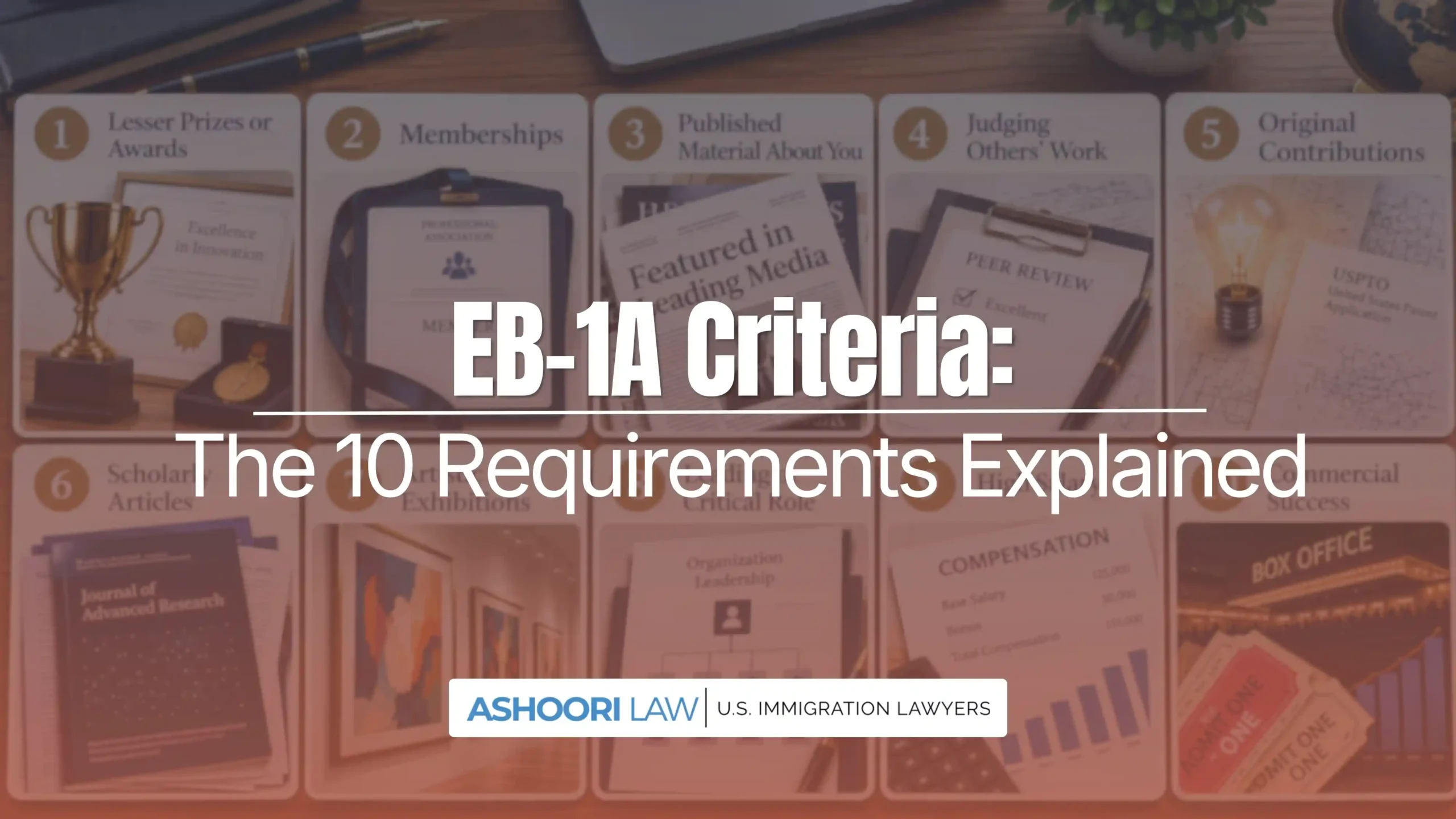
EB-1A Criteria: Evidence Guide for Each of the 10 Requirements
To qualify for an EB-1A green card, you must show either a one-time major, internationally recognized award (such as a Nobel Prize) or meet at least 3 of the 10 evidentiary criteria listed at 8 CFR 204.5(h)(3), and then satisfy a final merits review showing sustained national or international acclaim and that you are among the small percentage at the very top of your field.