
Immigration Guides
If your adjustment of status application (Form I-485) was postmarked or electronically submitted on or after September 18, 2026, USCIS decides the public charge question under the framework created by the Department of Homeland Security (DHS) final rule published in the Federal Register on July 20, 2026, which rescinded the 2022 public charge regulation effective September 18, 2026.
An L-1A manager or executive can stay in the United States for up to 7 years in total, and an L-1B specialized knowledge employee can stay for up to 5 years. The first approval is for up to 3 years, or up to 1 year if the employee is coming to open a new U.S. office, and extensions are granted in increments of up to 2 years until the maximum is reached (8 CFR 214.2(l)(7), (14), and (15)).
Starting with petitions postmarked on or after November 30, 2026, the USCIS fee for Form I-526E (regional center investor) rises from $3,675 to $7,850, Form I-526 (standalone investor) rises from $3,675 to $7,615, and Form I-829 (removal of conditions) rises from $3,750 to $5,000. The Department of Homeland Security published the final EB-5 fee rule in the Federal Register on September 30, 2026 (FR Doc. 2026-20016), and USCIS announced it on September 29, 2026. As of today, October 1, 2026, the current (lower) fees still apply, and they remain in effect for filings postmarked through November 29, 2026.
If your job ends while you hold E-1, E-2, E-3, H-1B, H-1B1, L-1, O-1, or TN status, federal regulation (8 CFR 214.1(l)(2)) provides that you and your dependents are not considered to have failed to maintain status solely because the employment ended, for up to 60 consecutive days or until your current authorized stay expires, whichever comes first.
There is no single “H-1B green card process.” An H-1B worker generally reaches permanent residence through one of five employment or family routes: an employer-sponsored petition through PERM labor certification (EB-2 or EB-3), a self-petitioned or employer-filed EB-2 National Interest Waiver, an EB-5 investment petition, or a family-based petition such as marriage to a U.S. citizen.
An approved L-1A petition helps an EB-1C case but does not decide it. The two categories share the one-year-abroad requirement, the qualifying corporate relationship, and the managerial and executive definitions, and neither requires labor certification (PERM). An EB-1C case requires that the U.S. employer must already have been doing business for at least one year on the date the Form I-140 is filed.
An L-1B specialized knowledge employee can get a green card, but only through a separate immigrant petition, and the realistic routes are: (1) employer sponsorship in EB-2 or EB-3 after PERM labor certification, (2) EB-1C if you move into a managerial or executive job and your job abroad was…
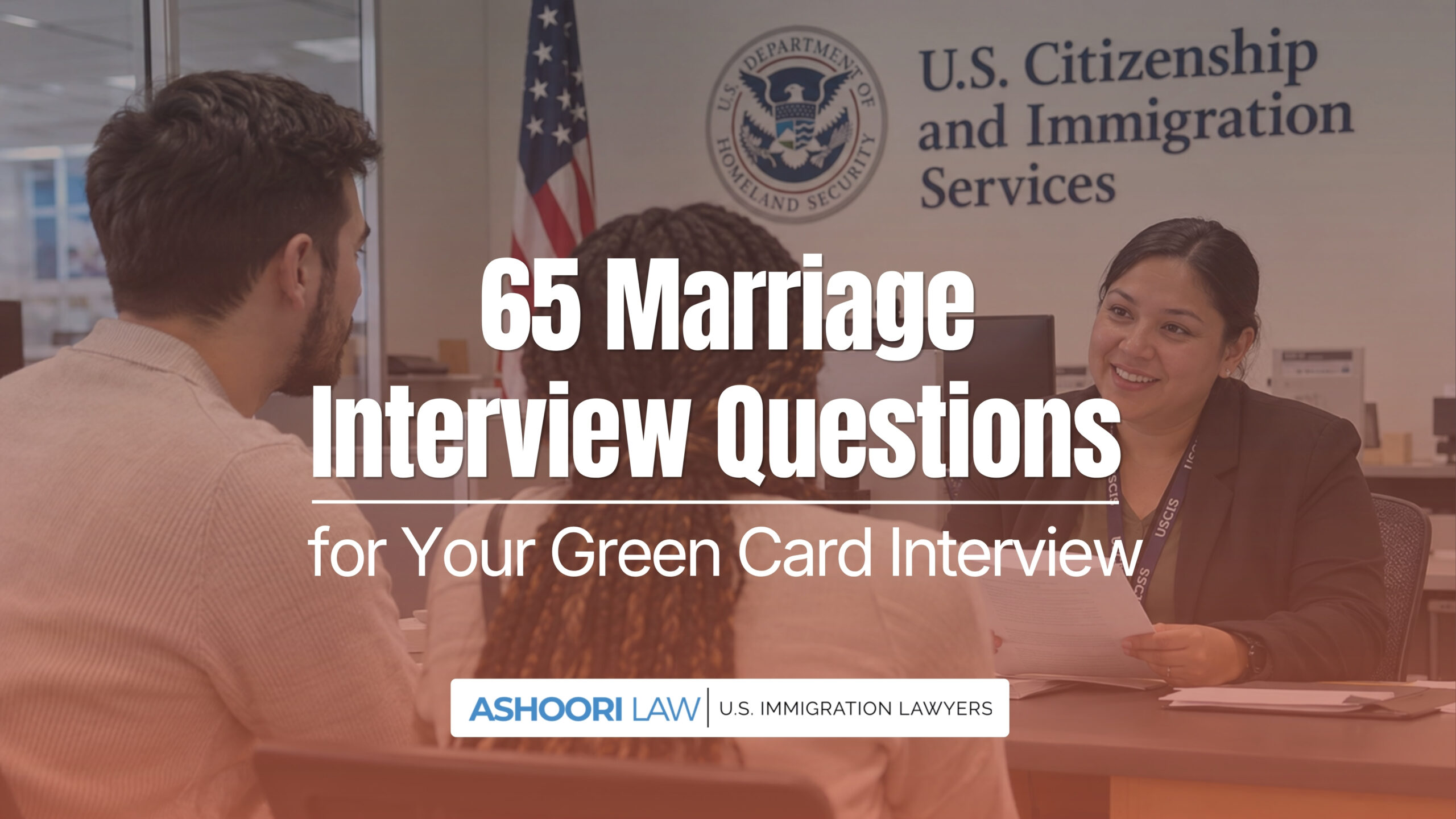
At a USCIS marriage green card interview for Adjustment of Status, the officer questions both spouses about each other’s background, how the relationship developed, your home, your daily routines, and the answers on your forms.
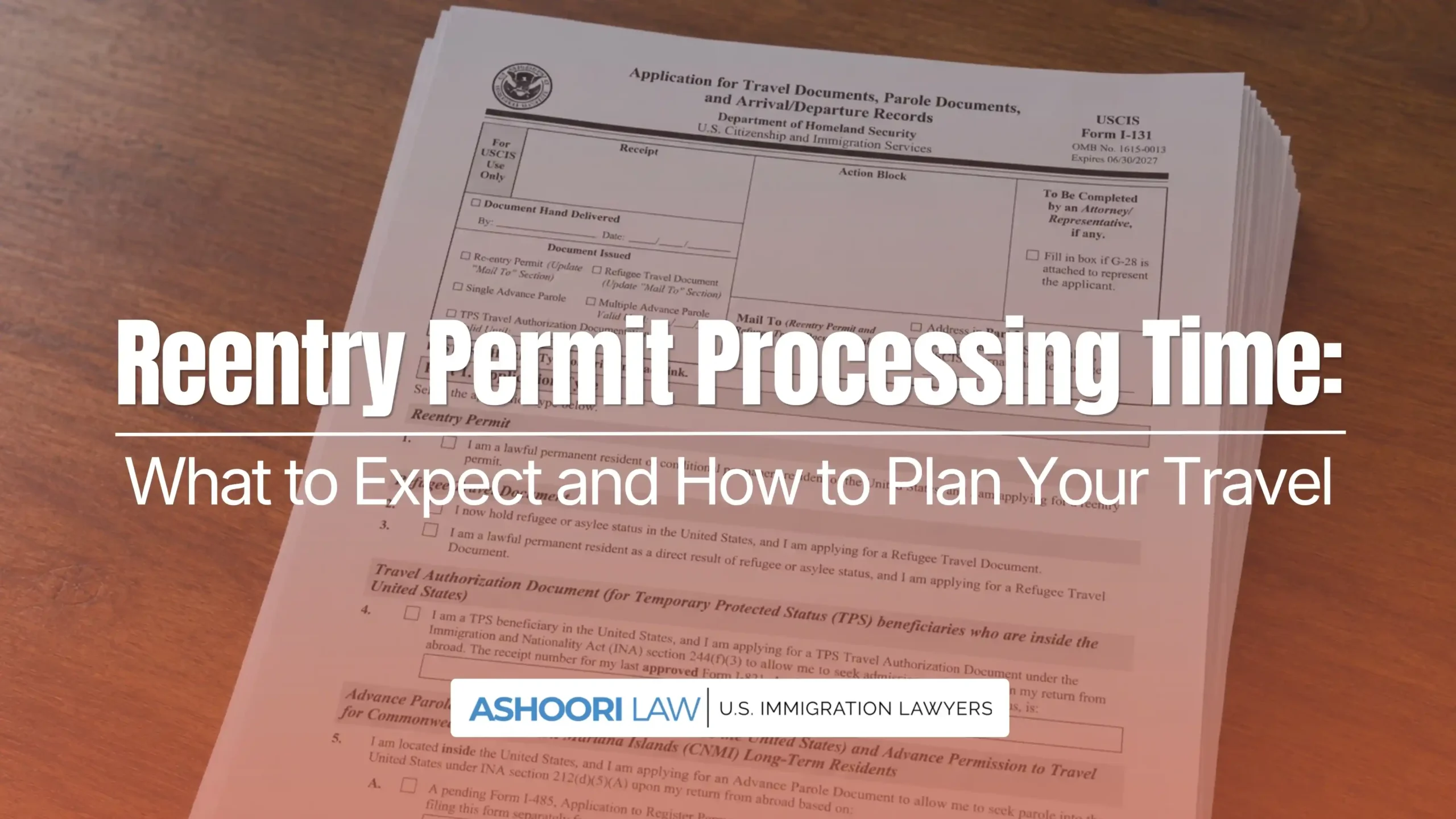
USCIS’s historical processing data show a national median of 14.9 months for Form I-131 “Travel Document” cases completed in fiscal year 2026 (data through July 31, 2026), compared with 13.6 months in fiscal year 2025 and 14.3 months in fiscal year 2024.

There are 63 TN visa categories. They are the professions listed in Appendix 1603.D.1 of the United States-Mexico-Canada Agreement (USMCA) and reproduced in 8 CFR 214.6(c), and the list is closed: a Canadian or Mexican citizen can hold TN status only to perform prearranged professional work in the United States…
As of September 30, 2026, it generally takes roughly 10 to 15 months from filing Form I-129F until the foreign fiancé(e) has a K-1 visa in hand, and roughly another 6 to 9 months after the marriage to obtain the green card through Adjustment of Status.
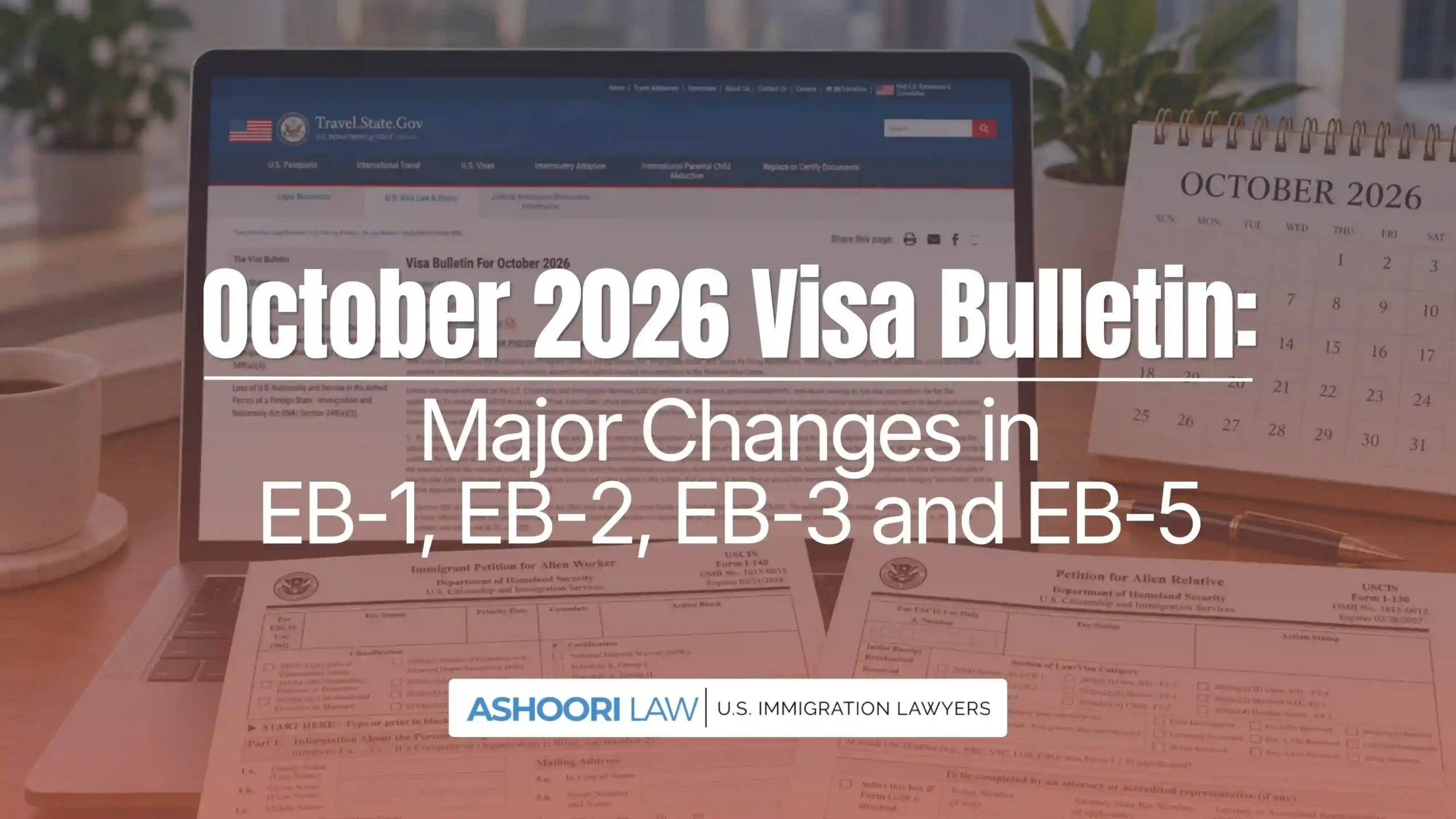
The October 2026 Visa Bulletin is the first bulletin of fiscal year 2027, and it’s got a mixed bag for those waiting for an immigrant visa. EB-2 India and EB-5 Unreserved India, which were listed as Unavailable in September, are back up and running again with new Final Action Date: November 1, 2013 and December 1, 2023, respectively.
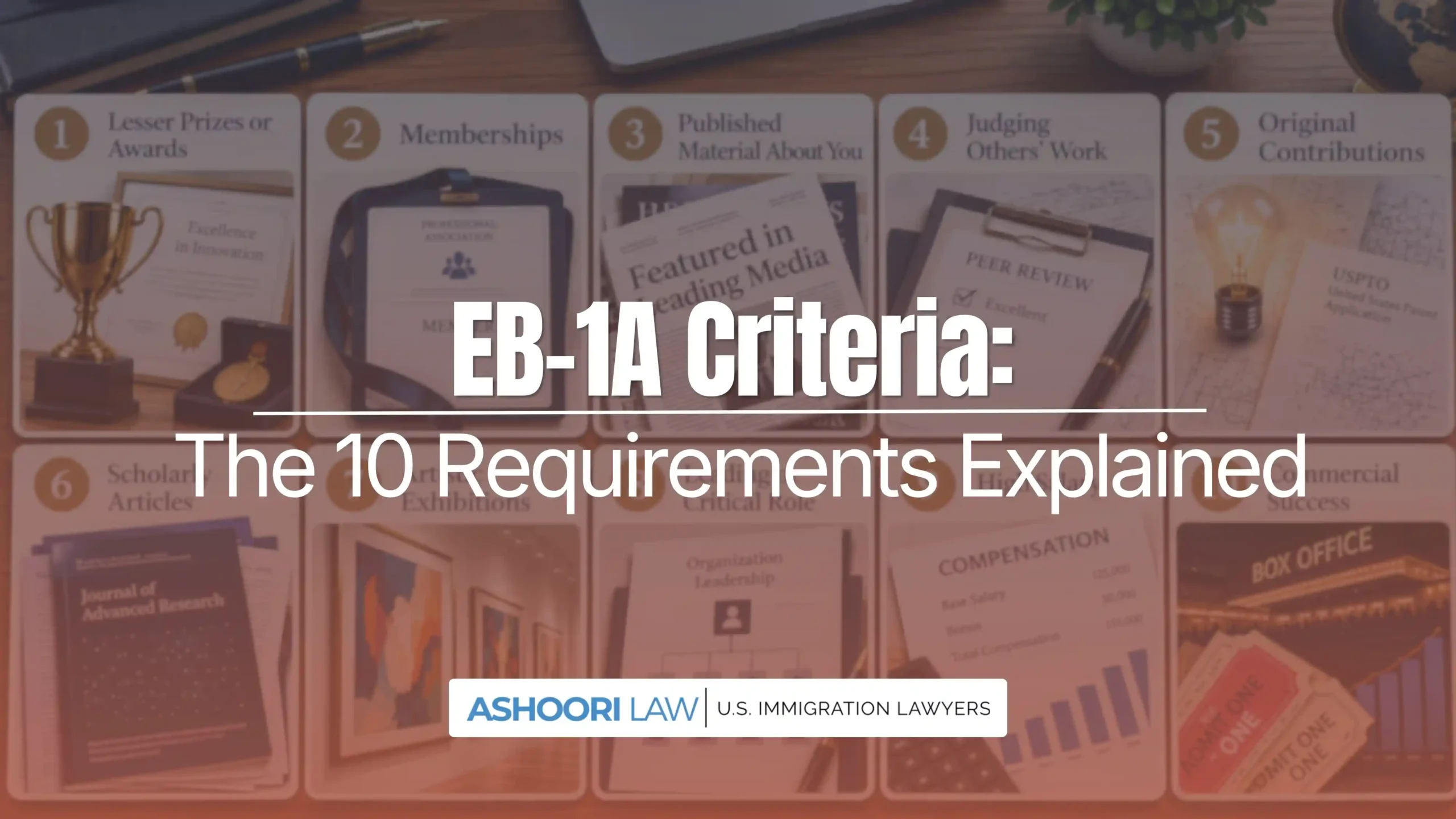
To qualify for an EB-1A green card, you must show either a one-time major, internationally recognized award (such as a Nobel Prize) or meet at least 3 of the 10 evidentiary criteria listed at 8 CFR 204.5(h)(3), and then satisfy a final merits review showing sustained national or international acclaim and that you are among the small percentage at the very top of your field.
The naturalization process has four main stages: you file Form N-400 (Application for Naturalization) with USCIS, attend a biometrics appointment if USCIS requires one, complete a naturalization interview that includes English and civics testing, and take the Oath of Allegiance at a ceremony. As of September 2026, the Form N-400 filing fee is $760 for paper filing or $710 for online filing, and how long the process takes depends on the USCIS field office handling your case.
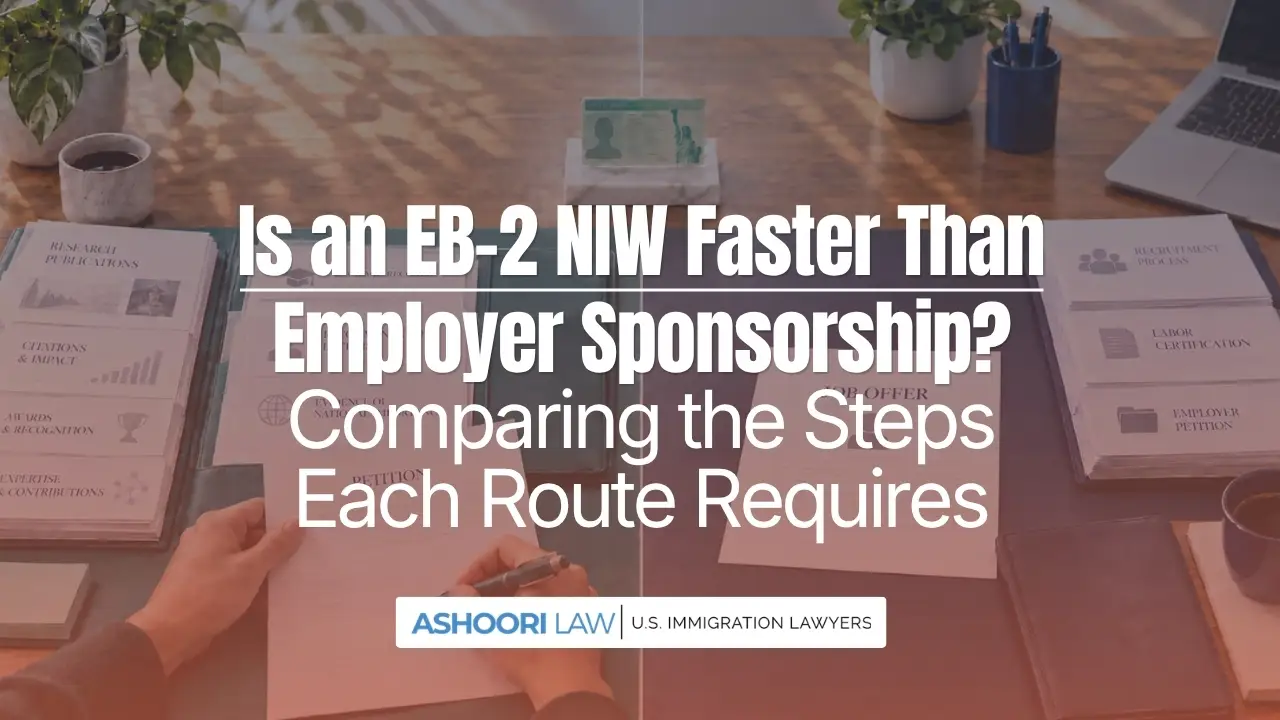
A national interest waiver (NIW) is faster than employer sponsorship at the front of the process because it removes the Department of Labor stages an employer-sponsored EB-2 must complete before the immigration petition can be filed: the prevailing wage determination, the recruitment period (including the notice of filing), and the labor certification (PERM) adjudication.


Michael Ashoori, Esq.
President of Ashoori Law
I’m a U.S. immigration lawyer and I help families, professionals, investors, and entrepreneurs get visas, green cards, and citizenship to the United States.
Since starting my law firm, I’ve helped thousands of people from all over the world with their immigration needs. I’m very passionate, hard-working, and committed to my clients.
Got a question? Send me an email.